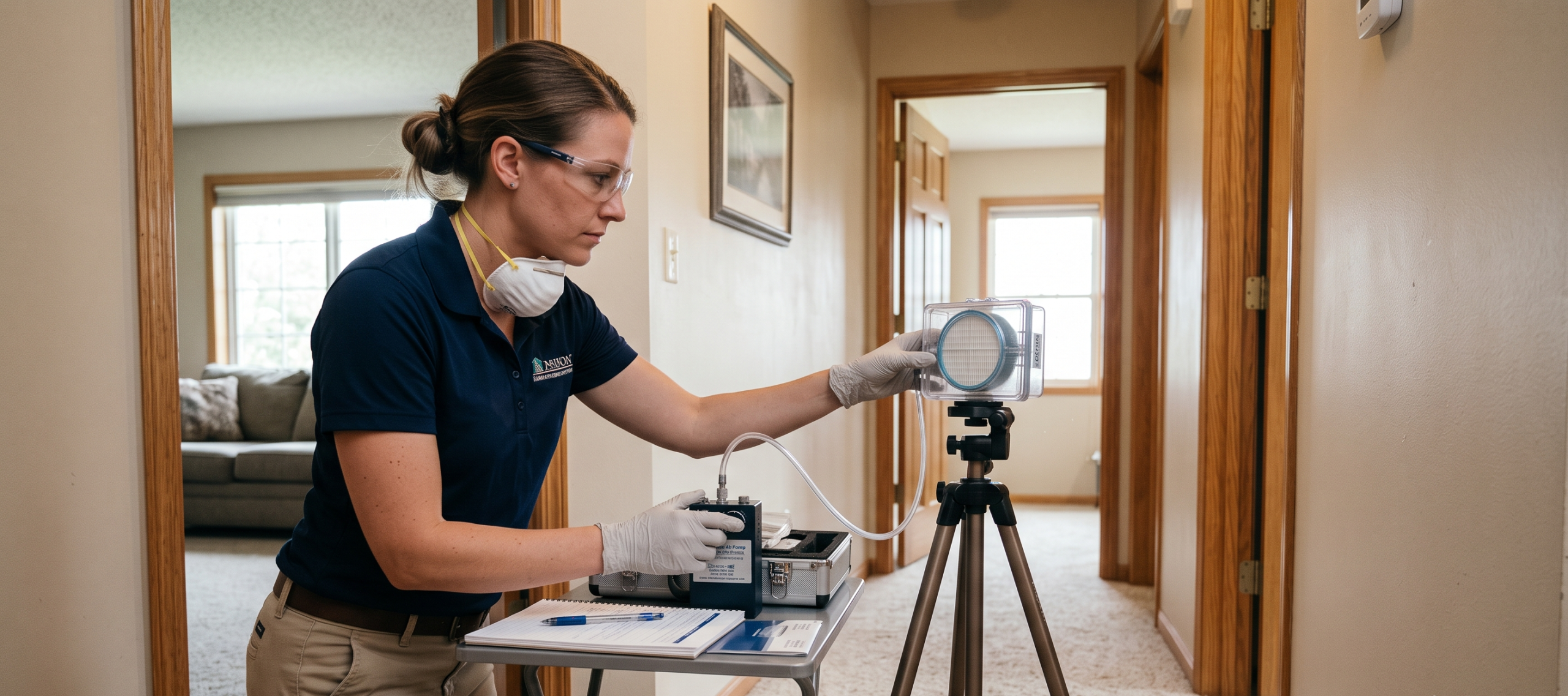
Mold air quality testing measures airborne mold spore concentrations to help determine if indoor air is contaminated. It cannot locate hidden mold or confirm active growth, but it provides critical data for further inspection and remediation decisions. Combined with moisture assessments, professional testing gives you the full picture of your indoor air quality.
What Does Mold Air Quality Testing Actually Measure?
Testing captures a snapshot of airborne mold spores and dust particles. A spore trap sampler collects samples onto a sticky slide, which is sent to a lab for analysis. The lab counts spores and identifies types (e.g., Aspergillus, Stachybotrys). Results are compared to outdoor baseline samples. However, testing cannot tell you if mold is actively growing or dormant, nor can it pinpoint the exact location of hidden mold. That’s why we always pair air sampling with a thorough visual inspection and moisture readings.
When Should You Consider Professional Mold Air Quality Testing?
You should consider testing when you smell musty odors, have unexplained allergy symptoms, or have experienced water damage.
Specific scenarios include:
- After a leak or flood, even after drying.
- When remodeling and suspecting hidden moisture.
- When occupants have persistent respiratory issues.
- Before buying or selling a home.
- After mold remediation, verify success.
If you see visible mold, testing is usually not needed; focus on removal. Testing becomes valuable when mold is suspected but not visible.
How Professional Mold Air Quality Testing Works
Our process is systematic. First, we perform a visual inspection and use moisture meters to detect hidden dampness. Then we collect air samples from inside and outside. The outside sample serves as a control. We typically sample multiple rooms, including any areas of concern. Samples are sent to a laboratory accredited by the AIHA for analysis. Results come back in 3–5 days, showing spore counts per cubic meter and types present. We interpret the data, compare to outdoor levels, and recommend next steps.
What Are the Health Risks of Mold Exposure?
Mold exposure can trigger allergic reactions, asthma attacks, sinusitis, and other respiratory issues. Some molds produce mycotoxins, but health effects depend on individual sensitivity. Symptoms include sneezing, coughing, itchy eyes, and fatigue. Infants, the elderly, and immunocompromised people are at higher risk. IAQ testing helps identify elevated spore levels that may be causing these symptoms, guiding you toward a healthier home.
How Much Does Professional Mold Air Quality Testing Cost?
Prices vary by location and scope. Expect to pay $250–$600 for a basic assessment (visual inspection plus air samples). Additional samples cost $50–$150 each. Comprehensive testing with moisture mapping and thermal imaging can run $300–$800. Some companies bundle inspection and testing. While DIY kits cost $30–$200, they lack professional interpretation. For accurate results and actionable advice, professional testing is worth the investment.
DIY Mold Test Kits vs. Professional Testing
| Factor | DIY Kit | Professional Testing |
|---|---|---|
| Cost | $30–$200 | $250–$800 |
| Accuracy | Variable; user error common | High; controlled sampling |
| Lab analysis | Included (sometimes limited) | Full analysis by an accredited lab |
| Interpretation | Self-read report | Expert explanation & recommendations |
| Inspection | None | Visual + moisture assessment |
| Best for | Screening, curiosity | Health concerns, real estate, legal |
We recommend professional testing when the stakes are high. For peace of mind, call (571) 625-5600 to schedule an assessment.
How to Choose a Reliable Mold Inspector?
Not all inspectors are equal. Look for these credentials:
- Certification from ACAC, IICRC, or similar.
- Experience with air quality testing and moisture investigation.
- Third-party lab analysis (no conflict of interest).
- Clear pricing and a written report.
- References or online reviews.
Ask if they follow industry standards like ANSI/IICRC S520. A trustworthy inspector will explain limitations and never recommend unnecessary remediation.
What Happens After Testing? Next Steps
If spore levels are elevated, we identify the source through moisture mapping and inspection. Then we develop a remediation plan. For small areas, you can clean with soap and water. For larger contamination, hire a professional mold remediation service. After remediation, we recommend post-cleaning verification testing to confirm success. This ensures your indoor air is safe.
Preventing Mold Growth After Testing
Control moisture, that’s the key. Fix leaks promptly, use exhaust fans, keep humidity below 60%, and dry wet areas within 48 hours. Regularly inspect crawl spaces, attics, and basements. Moisture mapping and leak detection can catch hidden problems early. Also, consider water damage restoration maintenance to prevent recurrence. By staying proactive, you reduce the need for future testing.
If you suspect mold or want to verify your air quality, contact us today at (571) 625-5600. Our experts will guide you through the process and help you breathe easier.