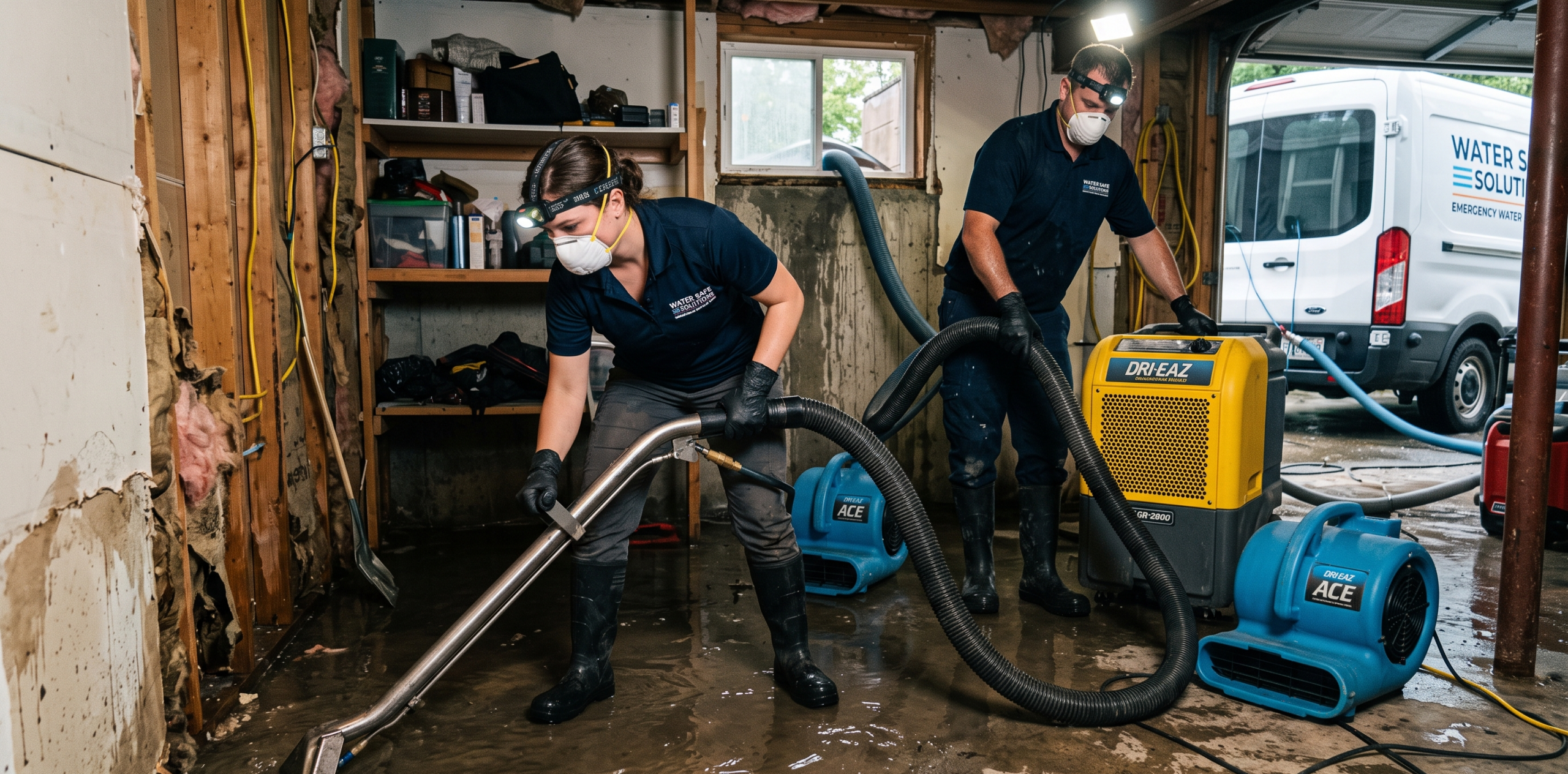
When water damage strikes, the first priority is removing standing water quickly to prevent structural damage and mold growth. Professional emergency water extraction methods rely on specialized pumps, vacuums, and drying equipment to restore your property efficiently.
What Is Emergency Water Extraction and Why Is Speed Critical?
Emergency water extraction is the rapid removal of standing water from a property after a flood, burst pipe, or leak. The goal is to minimize secondary damage like mold or rot. Every minute counts: within 24 hours, mold can begin to colonize, and porous materials like drywall may become permanently damaged.
Professional responders use industrial-grade equipment to extract water faster than any DIY method. This speed is crucial for saving flooring, walls, and personal belongings.
What Are the Most Common Emergency Water Extraction Methods Used by Professionals?
Professionals typically start with extraction, then move to drying and dehumidification.
The main methods include:
- Submersible pumps: For deep standing water (e.g., flooded basements), these pumps are placed directly in the water to pump it out rapidly.
- Wet/dry vacuums: Ideal for shallow water or small areas, they suck up water from carpets, hard floors, and upholstery.
- Absorbent towels and mops: Used for final surface water removal, especially on delicate surfaces like hardwood.
- Truck-mounted extraction units: Powerful systems that use negative pressure to pull water from carpets and padding.
These emergency water extraction methods are chosen based on water depth, contamination level, and material type.
What Equipment Do Professionals Use for Water Extraction and Drying?
Beyond pumps and vacuums, professionals deploy advanced drying equipment to remove hidden moisture. Key tools include:
| Equipment | Purpose |
|---|---|
| Air movers | High-velocity fans accelerate evaporation by directing airflow across wet surfaces. |
| Dehumidifiers | Remove moisture from the air, preventing condensation and mold. Refrigerant units work best in warm conditions; desiccant units work best in cold. |
| Moisture meters | Detect hidden moisture in walls, floors, and ceilings. |
| Infrared cameras | Identify wet spots behind surfaces without invasive probing. |
Using these together ensures thorough drying, often within 3-5 days, depending on the extent of damage.
Can I Handle Emergency Water Extraction Myself, or Should I Call a Professional?
For small spills (under a few gallons), a wet/dry vacuum and fans may suffice. However, for any flood involving contaminated water (black water), sewage, or water that has soaked into walls and subflooring, professional help is essential. DIY extraction often leaves hidden moisture, leading to mold and structural rot.
Professionals have the training and equipment to categorize water damage (Clean, Grey, Black) and follow IICRC standards. They also handle insurance documentation and can prevent long-term issues.
How Much Does Professional Water Extraction and Drying Cost?
Costs vary based on water category, affected area size, and drying time.
Typical ranges:
- Minor extraction (single room): $500–$1,500.
- Moderate flood (basement or multiple rooms): $2,000–$5,000.
- Major flood (whole house): $5,000–$15,000+.
Most homeowner insurance policies cover water damage from sudden events (e.g., burst pipes) but not from neglect or flooding. Always check your policy and document damage thoroughly.
What Safety Precautions Should I Take During and After Water Extraction?
Safety is paramount: always turn off electricity before entering a flooded area to avoid shock. Wear rubber boots, gloves, and a mask if the water may be contaminated. After extraction, ventilate the area by opening windows and using fans until professionals arrive.
If you suspect mold or sewage, avoid disturbing the area and call experts immediately. Our team is available 24/7 for emergency water extraction services. Call (571) 625-5600 for immediate response.
How Do Professionals Prevent Mold After Water Extraction?
Mold prevention is a critical step after water removal. Professionals use antimicrobial treatments on affected surfaces, followed by thorough drying to below 15% moisture content. They also monitor humidity levels with hygrometers, keeping indoor humidity between 30-50% to inhibit mold growth.
If mold is already present, professional mold remediation services remove contaminated materials and clean the area with HEPA vacuums and air scrubbers.
What Is the Typical Timeline for Emergency Water Extraction and Drying?
Most emergency water extraction jobs follow this sequence:
- Inspection and assessment (1-2 hours): Identify water source, category, and affected areas.
- Water extraction (2-8 hours): Remove standing water using pumps and vacuums.
- Structural drying and dehumidification (3-5 days): Air movers and dehumidifiers run continuously, with daily moisture checks.
- Cleaning and sanitizing (1-2 days): HEPA vacuuming, antimicrobial treatment, and odor removal.
- Restoration and repair (days to weeks): Replace drywall, flooring, or other damaged materials.
Factors like water category, porosity of materials, and weather can extend or shorten drying time.
How Do I Choose the Right Water Damage Restoration Company?
Look for these qualities:
- IICRC certification: Ensures technicians follow industry standards.
- 24/7 emergency service: Water damage doesn’t wait for business hours.
- Advanced equipment: Moisture meters, infrared cameras, and industrial dryers.
- Insurance assistance: Helps with claim documentation and direct billing.
- Transparent pricing: Get a detailed estimate before work begins.
Read reviews and ask about their process. Our team at Waterdamagecentrevillva.com meets all these criteria. Call (571) 625-5600 for a free consultation.
Final Thoughts on Professional Water Extraction
Understanding emergency water extraction methods helps you act quickly and wisely. While minor spills can be DIY, professional equipment and expertise are invaluable for preventing long-term damage. Trust certified experts to restore your property safely and efficiently.
Remember: time is your enemy when water invades your home. Contact a reputable restoration company like ours at (571) 625-5600 for immediate help.