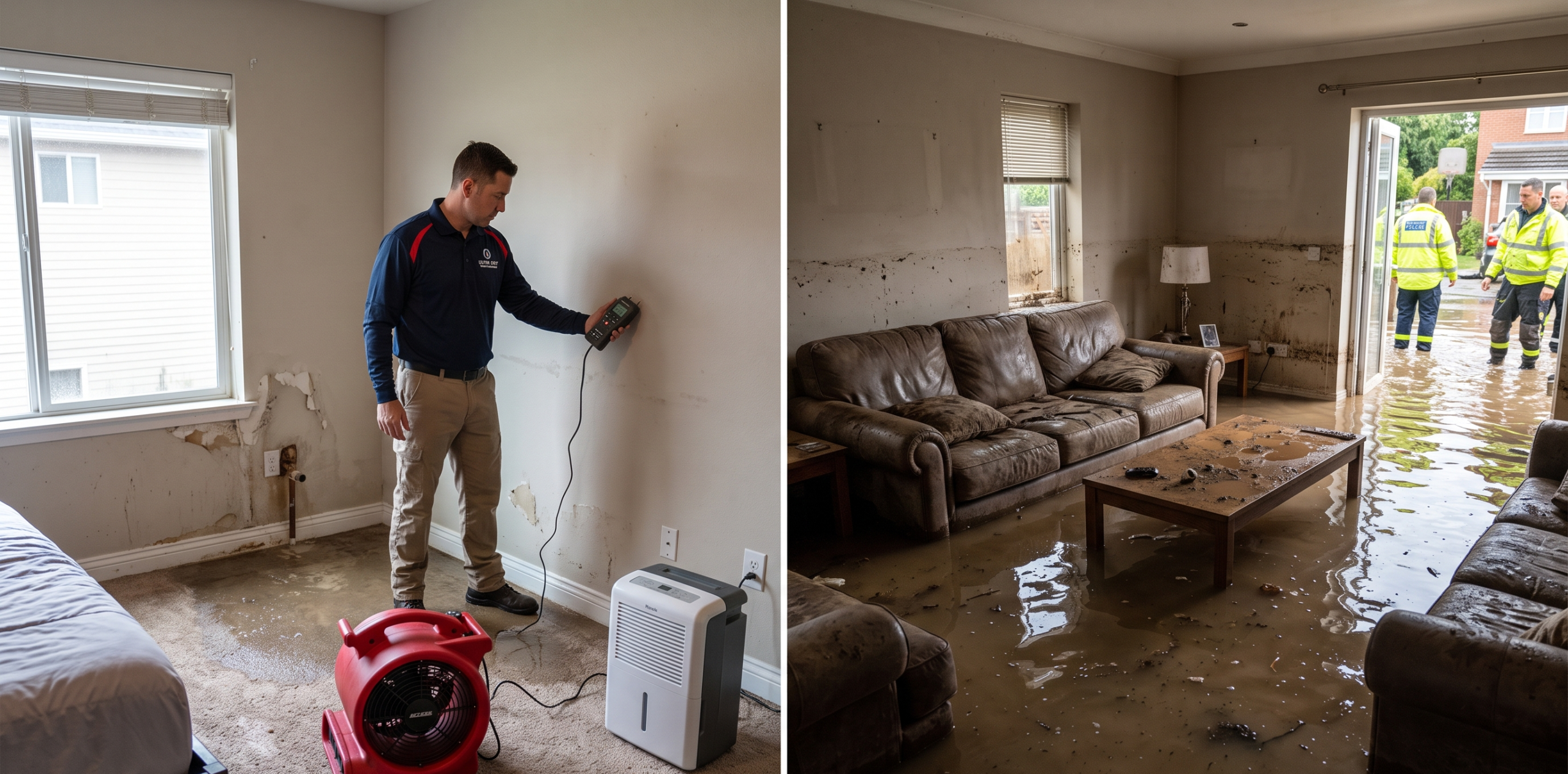
The main difference between water damage and flood damage is the source of the water. Water damage originates from inside your home (like a burst pipe), while flood damage comes from external sources (like heavy rain or rising rivers). This distinction matters because standard homeowners insurance typically covers water damage but not flood damage—separate flood insurance is required.
What is the main difference between water damage and flood damage?
The key difference lies in where the water comes from. Water damage starts inside your property—think a leaking pipe, overflowing toilet, or faulty water heater. Flood damage, on the other hand, is caused by water that enters your home from the outside due to natural events like storms, storm surges, or overflowing bodies of water. As defined by FEMA, a flood affects two or more acres or properties simultaneously. Understanding this distinction is crucial for insurance claims and choosing the right restoration approach.
How do insurance classifications affect coverage for water damage vs. flood damage?
Insurance companies classify water damage and flood damage differently. Standard homeowners insurance typically covers sudden and accidental water damage from internal sources, such as burst pipes or appliance failures. However, flood damage is excluded from standard policies. To get coverage for floods, you need a separate flood insurance policy, usually through the National Flood Insurance Program (NFIP) or a private insurer. Knowing these classifications can save you from denied claims and unexpected out-of-pocket expenses.
What are the common causes of water damage and flood damage?
Water damage is often caused by:
- Burst or leaking pipes.
- Malfunctioning appliances (washing machines, dishwashers, water heaters).
- Clogged drains or sewer backups.
- Roof leaks due to damaged shingles.
- Overflowing sinks, bathtubs, or toilets.
Flood damage typically results from:
- Heavy rainfall that overwhelms drainage systems.
- Storm surges along coastal areas.
- Rivers or streams overflowing their banks.
- Rapid snowmelt saturates the ground.
- Mudflows (a type of flood covered by flood insurance).
Does homeowners insurance cover flood damage?
No, standard homeowners insurance does not cover flood damage. You must purchase a separate flood insurance policy to protect your home and belongings. Flood insurance covers structural damage and contents from rising waters, but it does not cover temporary housing or additional living expenses unless an endorsement is added. If you live in a flood-prone area, investing in flood insurance is essential for financial protection.
What immediate steps should you take after water damage or flood damage?
Regardless of the source, quick action is critical. If you have water damage, stop the source if safe, then call a professional restoration company immediately. Document the damage with photos and video for insurance claims. For flood damage, do not enter the water if it’s contaminated or electrified, and wait for authorities to declare it safe. Then, contact your insurance company and a certified restoration team. Our 24/7 emergency crew is available at (571) 625-5600 for immediate assistance.
How does the restoration process differ for water damage vs. flood damage?
While both involve water extraction, drying, and repair, the approach varies. Water damage restoration typically focuses on a contained area, with steps like extraction, structural drying, dehumidification, and mold prevention. Flood damage restoration often involves more extensive cleanup due to contaminants in the water (Category 3 black water). It requires hazardous material handling, disinfection, and sometimes major reconstruction. For both, hiring a certified professional ensures thorough drying and prevents secondary damage like mold growth.
What are the health risks associated with water damage and flood damage?
Water damage can quickly lead to mold growth, which causes respiratory issues and allergies. Flood damage carries even greater risks because the water may contain sewage, chemicals, or bacteria. Exposure can lead to gastrointestinal illnesses, skin infections, and other serious health problems. Professional restoration includes proper safety gear (PPE), water testing, and antimicrobial treatments to ensure your home is safe to occupy.
How much does water damage or flood damage restoration cost?
Costs vary widely based on the extent of damage, water source, and size of affected area. On average, water damage restoration ranges from $1,000 to $4,000, while flood damage restoration can cost $5,000 to $20,000 or more. Factors include water extraction, drying equipment, repairs, and mold remediation. For a detailed breakdown, see our pricing guide. Most insurance policies cover water damage restoration minus the deductible, but flood claims depend on separate flood coverage.
How can you prevent water damage and flood damage?
Prevention starts with maintenance. Regularly inspect pipes, appliances, and roofs for leaks. Install water leak detectors and sump pumps. Clean gutters and downspouts to direct water away from your foundation. For flood protection, elevate electrical systems and use flood barriers. Know if you’re in a high-risk flood zone, check FEMA maps. Also, consider flood insurance even if not required. Taking these steps reduces the chance of costly emergencies.
When should you call a professional restoration company?
You should call a professional water damage restoration company immediately after any water intrusion, whether from internal or external sources. Professionals have specialized equipment (industrial dryers, moisture meters, thermal imaging) and training to handle hidden moisture, prevent mold, and properly sanitize contaminated water. DIY attempts often lead to incomplete drying, higher costs, and health issues. Our team is available 24/7—just dial (571) 625-5600.
Water Damage vs. Flood Damage
| Category | Water Damage | Flood Damage |
|---|---|---|
| Source of water | Internal: pipes, appliances, roof leaks | External: storms, rising waters, mudflows |
| Insurance coverage | Typically covered by homeowners’ insurance | Requires separate flood insurance (NFIP) |
| Common causes | Burst pipes, overflowing toilets, appliance leaks | Heavy rain, storm surge, river overflow |
| Health risks | Mold growth, minor contaminants | Bacteria, sewage, chemicals, high risk |
| Restoration complexity | Moderate: contained area, clean water cleanup | Complex: large area, black water, sanitization |
| Average cost | $1,000 – $4,000 | $5,000 – $20,000+ |
Understanding the difference between water damage and flood damage can save you thousands and protect your family’s health. Always verify your insurance policy, act fast when water intrudes, and never hesitate to call experts. For professional restoration services, contact us at (571) 625-5600.