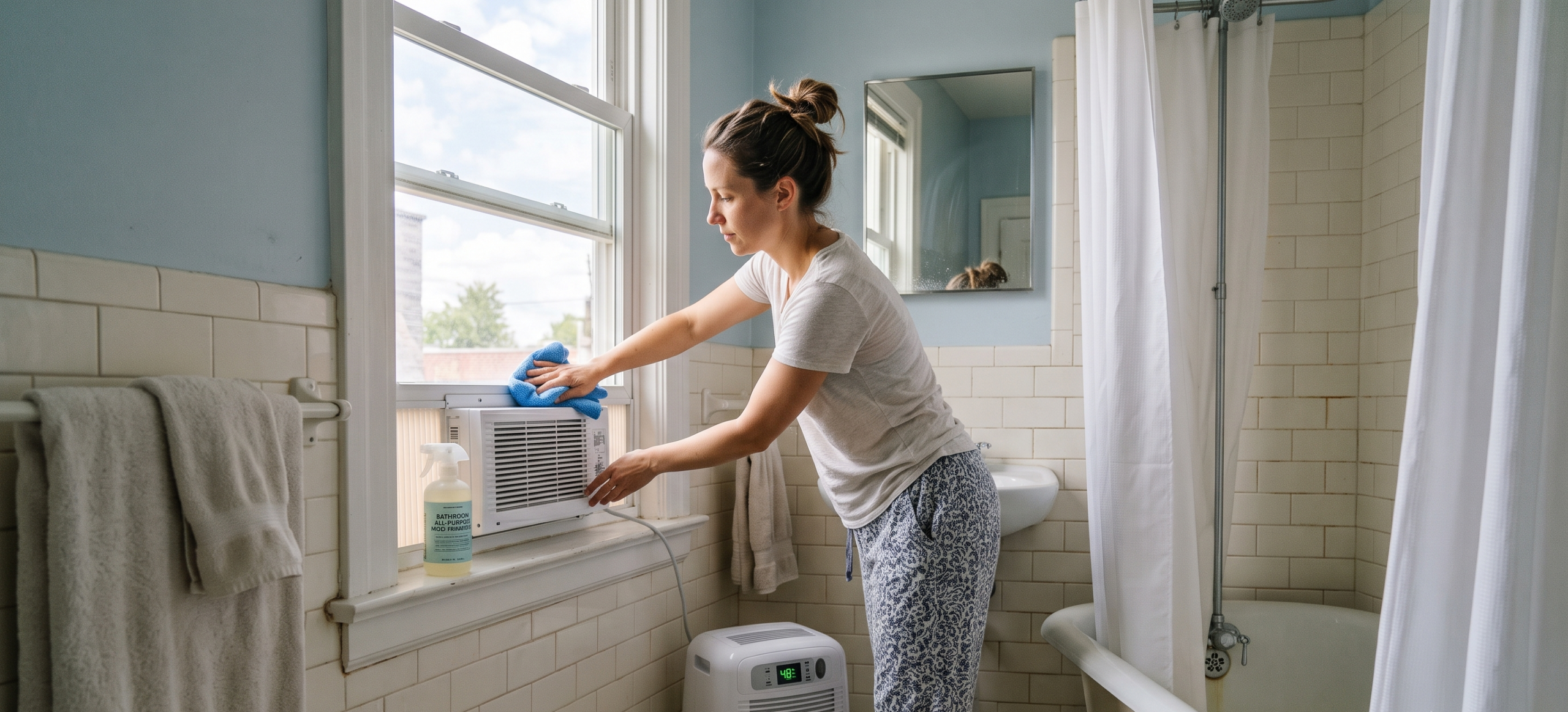
To prevent mold in bathroom without a vent, you must aggressively manage moisture with a combination of high-performance exhaust fans, dehumidifiers, and daily cleaning routines. Even without a window, you can keep humidity low and stop mold before it starts.
Why Do Bathrooms Without Vents Get Mold So Fast?
Mold thrives in damp, dark, and poorly ventilated spaces. When you shower without a vent, steam has nowhere to go. Condensation builds on walls, ceilings, and fixtures, creating the perfect breeding ground for mold spores. Within 24 to 48 hours, those spores can start colonizing.
We’ve seen bathrooms where moisture seeped into paint cracks and grout lines, leading to black spots that are tough to remove. The key is to remove moisture quickly before it causes lasting damage.
How Can I Ventilate a Bathroom Without a Window or Exhaust Fan?
If you can’t install a traditional vent, you have several options to improve airflow and reduce humidity.
Install a High-Performance Exhaust Fan
Even without a window, you can still duct an exhaust fan through the roof or an exterior wall. Look for a fan rated at least 1 CFM per square foot of bathroom space and equipped with a humidity sensor or timer. For small bathrooms, a fan with 50-80 CFM works well; larger spaces may need 100+ CFM.
If your fan vents into an attic, you may be moving moisture into the structure, which can cause mold inside the walls. Ensure your fan vents directly outside.
Use Door Vents or Louvered Doors
If you can’t install a fan, a louvered door allows air to circulate more freely. You can also add a door vent – a small grille cut into the bottom of the door – to let air escape even when the door is closed.
Portable Fans and Dehumidifiers
Running a portable fan during and after showers helps move moist air out of the bathroom. A dehumidifier is even more effective at pulling moisture from the air. We recommend a compact, desiccant-style dehumidifier for bathrooms because they work well in cool, damp conditions and don’t freeze like compressor models.
What Are the Best Dehumidifiers for a Bathroom?
| Type | Pros | Cons | Best For |
|---|---|---|---|
| Desiccant | Works in low temps, quiet, light | Higher energy use, smaller capacity | Small bathrooms, cool climates |
| Compressor | Higher capacity, energy efficient | Noisy, not ideal in cold | Large bathrooms, warm climates |
| Peltier (thermoelectric) | Very quiet, compact | Low capacity, not effective in high humidity | Very small bathrooms, minimal use |
Look for a dehumidifier with a built-in hygrometer and auto shut-off. Place it on a shelf or counter away from direct water spray. Empty the tank daily or use a model with a continuous drain hose.
Does Mold-Resistant Paint Actually Help?
Mold-resistant paint can help, but it’s not a miracle cure. These paints contain antimicrobial additives that prevent mold growth on the paint surface. However, if moisture is still present, mold can grow on top of the paint or seep through cracks.
For best results, first clean existing mold thoroughly with a mold-killing cleaner, then apply a primer designed for mold resistance before painting. Even with mold-resistant paint, you still need to control humidity.
What Daily Habits Prevent Mold When There’s No Vent?
These small habits make a big difference:
- Wipe down shower walls and doors with a squeegee or towel after each use.
- Keep the bathroom door open for at least 30 minutes after showering.
- Hang wet towels and bathmats outside the bathroom to dry.
- Use a moisture absorber (like DampRid) in corners or on windowsills.
- Clean bathroom surfaces weekly with a mold-inhibiting cleaner like vinegar or a commercial product.
- Run a portable fan or dehumidifier for an hour after each shower.
How Can I Clean Mold Safely and Prevent Its Return?
If you spot mold early, you can often clean it yourself. For small patches (less than 10 square feet), use a solution of equal parts white vinegar and water, or a non-abrasive bathroom cleaner. Spray the area, let it sit for 10 minutes, then scrub with a soft brush. Rinse and dry thoroughly.
Always wear rubber gloves, goggles, and an N95 respirator when cleaning mold to avoid inhaling spores. Never mix bleach with other cleaners – it can create toxic fumes.
If mold keeps returning despite your efforts, it may be growing inside the walls or under the flooring. That’s when you need professional mold remediation services to find and remove the source.
When Should I Call a Professional for Mold Remediation?
You should call a professional if:
- The mold covers more than 10 square feet.
- You suspect mold behind walls, under floors, or in your HVAC system.
- You or your family experience allergic reactions, asthma, or respiratory issues.
- The mold returns after thorough cleaning.
Professionals have the equipment to detect hidden moisture, test air quality, and safely remove mold without spreading spores. For a thorough assessment, consider a mold inspection and air quality testing service.
How Much Does Mold Remediation Cost?
| Factor | Cost Range |
|---|---|
| Inspection and testing | $200 – $600 |
| Small area remediation (less than 10 sq ft) | $500 – $1,500 |
| Moderate area (10-30 sq ft) | $1,500 – $3,500 |
| Large area (30+ sq ft) or structural contamination | $3,000 – $10,000+ |
Costs vary based on the extent of mold, accessibility, and necessary repairs. Most insurance policies cover mold remediation only if it’s caused by a covered water damage event. Get a written estimate before work begins.
Take Action to Prevent Mold in the Bathroom Without Vent
Living without a bathroom vent doesn’t mean you’re doomed to mold problems. By combining a good exhaust fan or dehumidifier, smart daily habits, and occasional professional help, you can keep your bathroom dry and healthy. If you need expert assistance with stubborn mold, call us today at (571) 625-5600 for a consultation.