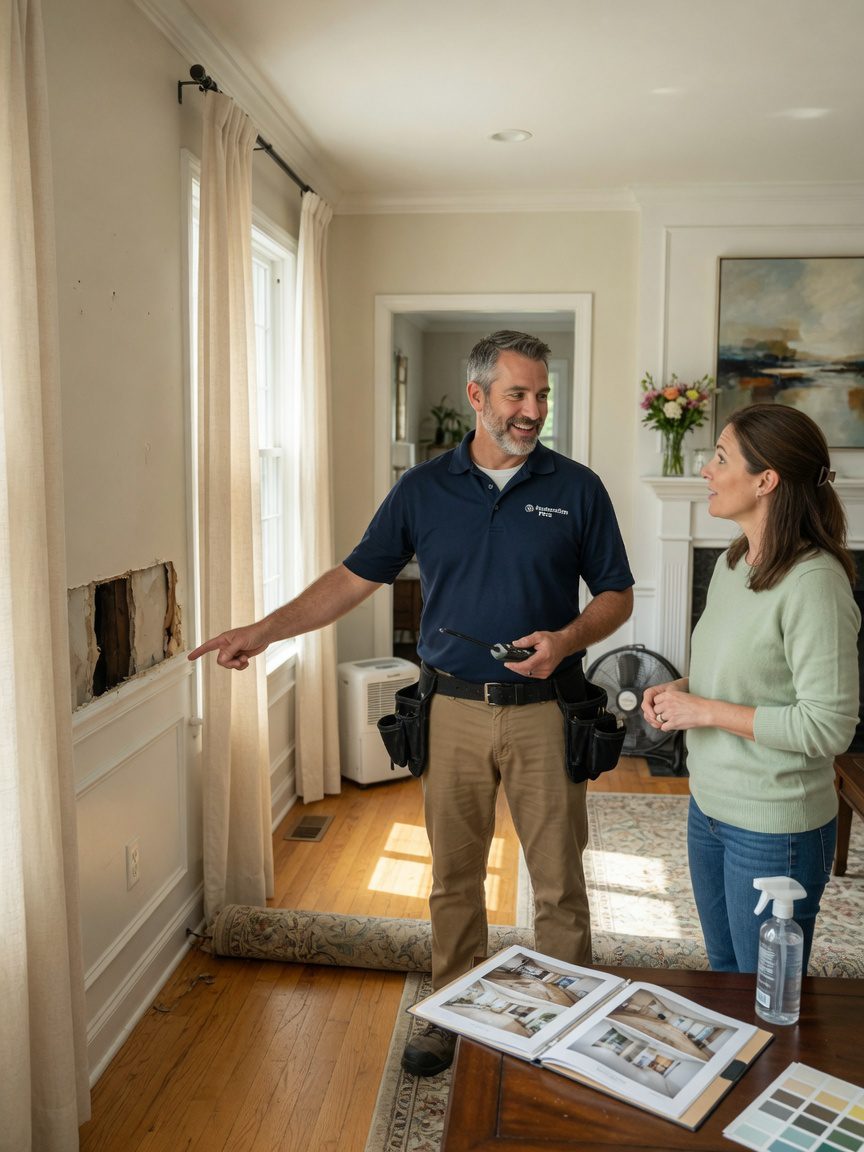
Navigating water damage in a Centreville HOA community requires understanding explicit bylaws that delineate property owner and association responsibilities for structural, common, and individual unit elements. These guidelines dictate who is financially liable and authorized to initiate repairs.
Understanding HOA Bylaws and Responsibilities
Homeowner Association bylaws serve as the primary document for resolving water damage issues. They precisely outline the maintenance responsibilities for various property components. Typically, common areas, such as roofs, exterior walls, and shared pipes, fall under the HOA’s purview, while interior unit damage is the owner’s responsibility.
It’s critical to review your specific HOA documents immediately after discovering water intrusion. These documents often specify procedures for reporting damage, approved vendors, and timelines for repairs. Misinterpreting these clauses can lead to delays or disputes regarding financial liability and the scope of work.
Owner vs. HOA: Delineating Damage Responsibility
In Centreville HOAs, the source of water damage usually determines responsibility. If the damage originates from a common element, like a burst pipe in a shared wall, the HOA is often responsible for repairing the common area and sometimes the resulting damage to units. However, if a personal appliance malfunctions within your unit, such as a dishwasher or water heater, the damage is typically the homeowner’s responsibility.
The ‘peril’ that caused the damage is also relevant. For example, a storm causing roof leaks might be an HOA responsibility, whereas a preventable plumbing leak from an unmaintained water heater is likely the homeowner’s. Always document the origin carefully.
Initial Steps After Discovering Water Damage
Upon discovering water damage, immediate action is paramount. First, secure your unit by stopping the water source if possible and mitigating further damage. This might involve turning off the main water supply.
Next, document everything with photos and videos, noting the date and time. Report the incident to your HOA management and your personal insurance provider promptly. Failure to follow the HOA’s reporting protocol could jeopardize your claim.
Centreville Water Damage Rescue offers 24/7 emergency services to help mitigate damage quickly, regardless of HOA involvement. Contact us at (571) 625-5600 for immediate assistance.
Navigating Insurance Claims with HOAs
Insurance claims within an HOA can be complex, involving multiple policies. Your homeowner’s insurance policy typically covers your personal belongings and the interior of your unit. The HOA’s master policy usually covers common areas and structural elements.
Be aware of deductibles and subrogation clauses. If the HOA’s master policy covers a portion of the damage, their deductible may apply. Your insurer may also seek reimbursement from the HOA’s insurer if their negligence caused the damage. Coordinating claims with both your insurer and the HOA’s insurer is essential for a comprehensive resolution.
Selecting Approved Contractors for Repairs
Many HOAs in Centreville have a list of approved or preferred contractors for water damage restoration. It’s crucial to check with your HOA management before engaging any company. Using an unapproved contractor could violate bylaws and complicate reimbursement.
Even if an HOA provides a list, you can often obtain multiple quotes. Ensure any contractor you choose, whether HOA-approved or not, is licensed, insured, and has specific experience with water damage restoration in HOA communities. Centreville Water Damage Rescue is fully licensed and experienced in handling HOA-specific restoration projects.
Coordinating Repairs and Communication
Effective communication is key to a smooth restoration process. Maintain a detailed log of all interactions with your HOA, insurance providers, and contractors, including dates, names, and summaries of conversations. Share contractor timelines and scope of work with your HOA to ensure alignment with their guidelines.
Provide access for inspections and work crews, keeping in mind HOA rules about noise, working hours, and common area usage by contractors. Proactive communication minimizes misunderstandings and expedites resolution, particularly when multiple units are affected.
Understanding External Property Updates and Approvals
Water damage restoration sometimes necessitates external repairs or alterations, such as roof section replacements or exterior wall repairs. For these, HOA architectural review committees often require prior approval. Failing to secure documented approval can lead to rework, fines, or delayed repairs.
Submit detailed plans, material specifications, and contractor information to the HOA for review. Understand that their approval process may take time, so factor this into your repair schedule. Adhering to these guidelines ensures compliance and avoids future issues.
Preventative Measures and Maintenance in HOA Communities
Proactive maintenance is the best defense against water damage. Regularly inspect your unit’s plumbing, appliances, and windows for potential issues. Understand the maintenance schedule for common elements managed by the HOA, such as roof inspections or gutter cleaning.
Report any concerns about common areas to the HOA promptly. Participating in community discussions about preventative maintenance can also contribute to a safer environment for everyone. Investing in smart home devices like leak detectors can provide early warnings.
Common Pitfalls to Avoid in HOA Water Damage Situations
One common pitfall is assuming the HOA will cover all damages; this is rarely the case. Another is failing to document the damage thoroughly and promptly. Neglecting to inform both your insurer and the HOA simultaneously can also create delays.
Hiring an unapproved contractor, ignoring HOA architectural rules for exterior repairs, or delaying mitigation efforts are serious mistakes. Always consult your HOA bylaws and communicate openly to ensure a streamlined restoration process.
Emergency Services and Resources in Centreville
For immediate water damage emergencies in Centreville, a quick response is vital. Centreville Water Damage Rescue provides rapid emergency services, including water extraction, drying, and structural dehumidification. We understand the specific nuances of working within HOA parameters and can guide you through the initial steps.
We are available 24/7 to secure your property and begin the restoration process, helping to prevent secondary damage like mold growth. Contact Centreville Water Damage Rescue for professional and compliant water damage solutions.
FAQs About HOA Water Damage
Who is responsible for water damage from a burst pipe in a wall shared by two units?
Typically, if the pipe serves both units or is part of the building’s common plumbing system, the HOA would be responsible for repairing the pipe and potentially the resulting damage to common elements. Damages to personal property or unit interiors would likely fall under individual homeowner insurance, depending on the bylaws.
Does my HOA insurance cover my personal belongings after water damage?
No, the HOA’s master insurance policy generally covers common areas and the building’s structure, not individual unit owners’ personal belongings or interior finishes. Your personal homeowner’s or renter’s insurance is responsible for covering your possessions.
What if my HOA requires me to use a specific restoration company?
Many HOAs have preferred vendor lists to ensure quality and compliance. While you should confirm this requirement with your HOA management, you are often still allowed to obtain multiple quotes if you find a vendor that meets HOA criteria and licensing. Always adhere to their guidelines.
How quickly must I report water damage to my HOA?
Most HOA bylaws and insurance policies require prompt reporting, ideally within 24-48 hours of discovery. Delays can impact claim eligibility and exacerbate damage, so report immediately, especially if it involves common elements.
Can I perform water damage repairs myself in an HOA community?
Minor, cosmetic repairs might be allowable, but significant water damage restoration involving structural drying, mold remediation, or plumbing repairs typically requires licensed professionals. HOAs often stipulate that only approved and insured contractors perform such work to maintain community standards and safety.